Why Soil Investigation Is Essential for Safe, Stable and Economical Construction
Introduction
Every successful construction project begins with a strong foundation, and every reliable foundation begins with an understanding of the ground beneath it. Whether developing a residential building, industrial facility, highway, bridge, solar power plant, wind turbine foundation or transmission line structure, understanding subsurface soil conditions is essential for safe and durable construction.
Soil investigation, also known as geotechnical investigation, is the systematic process of examining soil and underlying geological strata to determine their engineering properties and suitability for supporting proposed structures. It provides the technical information required by geotechnical and structural engineers to select appropriate foundation systems and develop safe, economical designs.
Ignoring or inadequately assessing ground conditions can lead to foundation distress, excessive settlement, construction delays, cost overruns and, in severe cases, structural failure.
1. What Is Soil Investigation?
Soil investigation involves field exploration, sampling, laboratory testing and engineering evaluation to establish the subsurface conditions at a project site. The investigation is planned according to the nature of the proposed structure, expected loading, site geology, groundwater conditions and applicable technical requirements.
Typical activities include:
- Borehole Drilling: Exploring subsurface soil and rock strata at selected locations and depths.
- Standard Penetration Test (SPT): Evaluating soil penetration resistance and obtaining data for geotechnical assessment.
- Soil Sampling: Collecting disturbed and undisturbed samples for laboratory evaluation, wherever applicable.
- Groundwater Assessment: Observing groundwater conditions and their potential influence on excavation and foundation performance.
- Laboratory Testing: Determining properties such as grain-size distribution, Atterberg limits, moisture content, shear strength and compressibility.
- Geotechnical Analysis: Evaluating bearing capacity, settlement, liquefaction susceptibility and other relevant design considerations.
The investigation programme should be tailored to the project requirements rather than relying on a standard approach for every site.
2. Why Is Soil Investigation Important?
A. Determining Safe Foundation Bearing Capacity
One of the primary objectives of soil investigation is to assess the ability of the ground to support the loads transferred by a structure. The engineering evaluation considers factors such as soil strength, foundation dimensions, embedment depth, groundwater conditions and the nature of loading.
This information helps engineers determine an appropriate foundation system, such as isolated footings, combined footings, raft foundations or pile foundations, depending on site conditions and structural requirements. Without reliable subsurface information, foundation design may be based on assumptions that do not adequately represent actual ground conditions.
B. Controlling Foundation Settlement
A foundation may have sufficient bearing resistance but still experience excessive settlement. Soil investigation helps identify compressible soil layers, loose sand, soft clay and other ground conditions that may contribute to total or differential settlement.
Settlement assessment is particularly important for structures sensitive to deformation, including industrial buildings, equipment foundations, elevated structures and renewable energy installations. Proper evaluation helps engineers establish suitable foundation dimensions, founding levels and ground improvement measures where necessary.
C. Identifying Weak Soil and Unexpected Ground Conditions
Different soil layers can exhibit significantly different engineering properties, even within the same project site. Soft clay, loose sand, uncontrolled fill, organic soil, expansive soil, collapsible deposits, weathered rock and variable rock strata may affect construction and foundation performance.
A systematic investigation helps identify these conditions before major construction activities begin, allowing suitable engineering measures to be incorporated into the design and construction methodology.
D. Improving Project Safety and Reliability
Ground-related problems can affect the stability and serviceability of buildings, foundations, retaining structures, embankments and other infrastructure. Soil investigation provides essential information for assessing potential geotechnical hazards, including slope instability, groundwater-related difficulties, liquefaction susceptibility where relevant, and problematic soil or rock layers.
Identifying these risks at an early stage supports better engineering decisions and reduces the likelihood of avoidable construction problems.
E. Reducing Construction Costs and Delays
Skipping soil investigation may appear to reduce initial project expenditure, but it can expose the project to considerably greater costs later. Unexpected excavation conditions, foundation redesign, additional piling, ground improvement and construction stoppages can affect both the budget and project schedule.
A properly planned geotechnical investigation helps reduce uncertainty, optimize foundation design and support more realistic project planning. The objective is not simply to minimize investigation costs, but to obtain sufficient reliable information for safe and economical construction.
3. Importance of Soil Investigation in Renewable Energy Projects
Renewable energy infrastructure requires careful consideration of site-specific ground conditions because foundation performance directly affects structural stability, serviceability and long-term operational reliability.
A. Solar Power Plants
For utility-scale solar projects, geotechnical investigations help assess soil conditions relevant to module mounting structures, tracker foundations, inverter stations, transformer foundations and other associated infrastructure.
Depending on project requirements, the investigation may include boreholes, SPT, trial pits, laboratory testing, plate load tests and electrical resistivity testing. The results support foundation selection, evaluation of ground conditions and planning for installation activities.
B. Wind Turbine Foundations
Wind turbines transmit substantial vertical, lateral and overturning loads to their foundations. The geotechnical investigation must therefore provide suitable information on soil and rock strength, compressibility, groundwater conditions and subsurface variability.
These parameters are important for evaluating bearing resistance, settlement, rotational response and other foundation design requirements.
C. Transmission Lines and Substations
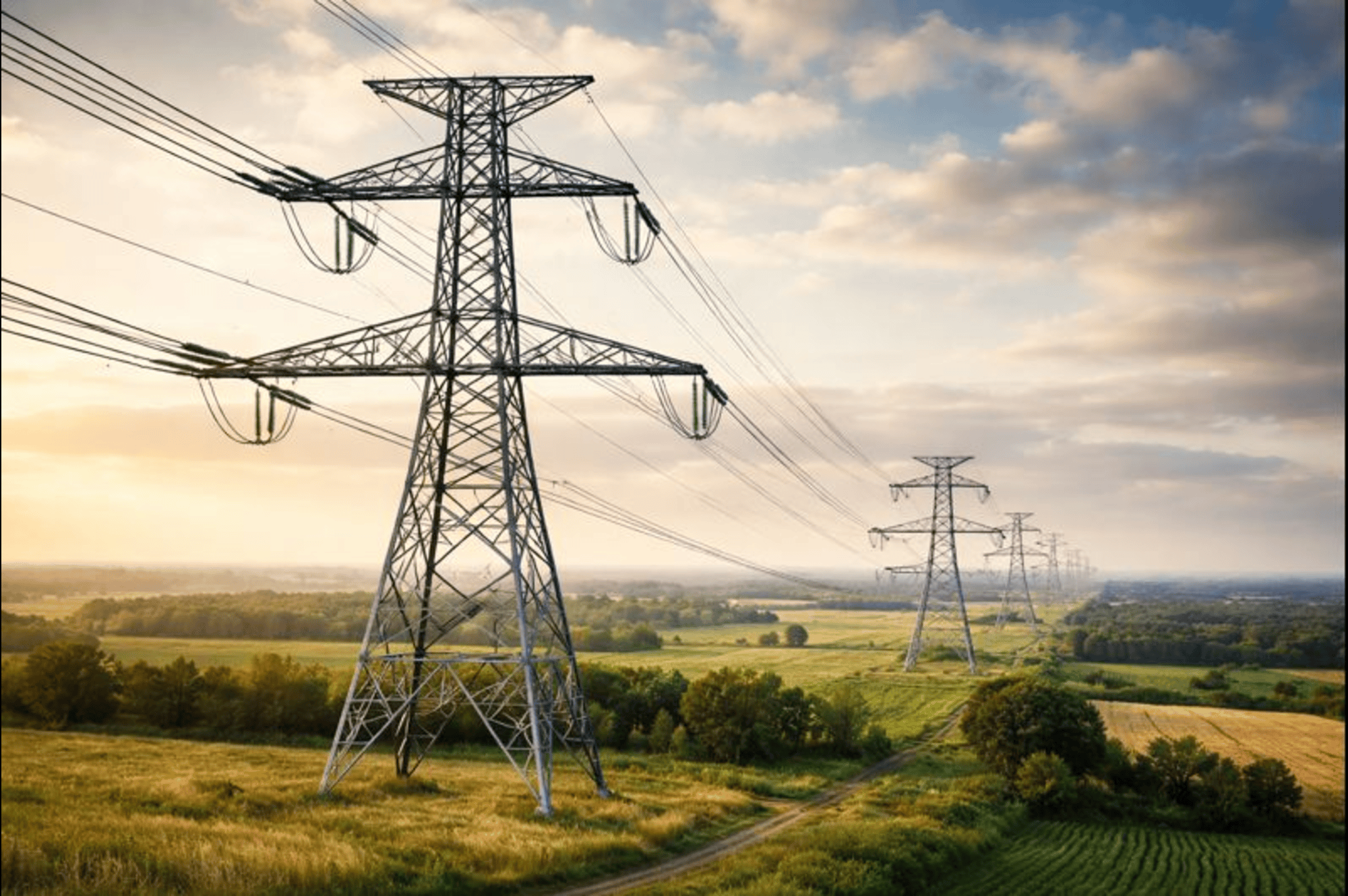
Transmission towers and substation structures may experience significant vertical, lateral and uplift forces. Site-specific geotechnical data help engineers evaluate foundation requirements and the suitability of the proposed founding strata.
A reliable investigation is particularly important where ground conditions vary along a transmission line route or across a large project site.
4. Common Field and Laboratory Tests
The selection of tests depends on the project type, subsurface conditions and applicable specifications. Common investigations include:
- Standard Penetration Test (SPT): Provides penetration resistance data used in geotechnical assessment.
- Grain-Size Analysis: Determines the distribution of soil particle sizes.
- Atterberg Limits: Helps characterize the consistency and plasticity of fine-grained soils.
- Shear Strength Tests: Provide parameters for evaluating soil strength and stability.
- Consolidation Test: Assesses the compressibility and time-dependent settlement characteristics of suitable fine-grained soils.
- Plate Load Test: Evaluates the load-settlement response of the ground at the test location under specified test conditions.
- Electrical Resistivity Test: Provides information about ground electrical resistivity for relevant earthing design and related assessments.
- Rock Testing: Determines relevant rock properties when rock formations are encountered and testing is required.
Each test serves a specific engineering purpose. Test selection, interpretation and reporting should follow applicable Indian Standards, project specifications and accepted engineering practices.
5. Role of Indian Standards in Soil Investigation
Geotechnical investigations in India should be planned and executed with reference to applicable Indian Standards and project-specific requirements. Relevant standards may include:
- IS 1892: Code of practice for subsurface investigation for foundations.
- IS 2131: Method for standard penetration test for soils.
- IS 2720 series: Methods of test for soils, covering various physical and engineering properties.
- IS 6403: Code of practice for determination of bearing capacity of shallow foundations.
- IS 2911 series: Standards relating to design and construction of pile foundations.
The applicable standard and its current edition should be verified for the particular test or engineering assessment. Compliance with a testing standard alone does not replace the need for sound engineering interpretation and project-specific design.
6. What Should a Geotechnical Investigation Report Include?
A comprehensive geotechnical investigation report should present the findings clearly enough for engineers and project stakeholders to make informed decisions. Depending on the agreed scope, the report generally includes:
- Project details, site location and investigation objectives.
- Scope of work and field investigation methodology.
- Borehole locations, depths and detailed soil or rock strata descriptions.
- Field test results and relevant observations.
- Groundwater observations, including limitations of measurements taken during the investigation.
- Laboratory test results and relevant engineering parameters.
- Geotechnical interpretation and foundation-related recommendations, where included in the scope.
- Construction considerations, identified risks and recommendations for further investigation, if required.
The report should distinguish measured results from interpreted parameters and design recommendations. Final foundation design must be undertaken by the responsible design engineer using applicable loading information, structural requirements and project criteria.
7. When Should Soil Investigation Be Conducted?
Soil investigation should ideally be completed during the planning and design stage, before finalizing the foundation design and commencing major construction activities.
Early investigation allows the design team to consider actual subsurface conditions while evaluating foundation alternatives, estimating costs and planning construction.
Additional investigation may also be necessary when unexpected soil or rock conditions are encountered, project loads change, the proposed structure is modified or the available information is insufficient for reliable engineering decisions.
Conclusion
Soil investigation is not merely a preliminary formality; it is an essential engineering activity that supports the safety, durability and economic performance of construction projects.
By identifying subsurface conditions, evaluating soil properties and providing reliable geotechnical data, a well-planned investigation helps engineers make informed foundation decisions, reduce uncertainty and minimize avoidable construction risks.
A strong structure begins with a well-understood foundation. Investing in proper soil investigation at the right stage helps build safer, more reliable and more economical infrastructure.
About Shreenath Laboratories & Consultants Private Limited (SLCPL)
Shreenath Laboratories & Consultants Private Limited (SLCPL), based in Rajkot, Gujarat, provides geotechnical investigation, construction material testing, field testing and related engineering consultancy services for infrastructure, industrial, renewable energy and other construction projects.
Our technical team focuses on systematic field investigations, reliable testing practices and clear technical reporting to support informed engineering decisions.
For project-specific requirements, consult a qualified geotechnical professional to determine the appropriate investigation scope and testing programme.